
Custom artwork feels easier to approve when the files are organized before the review starts. A good template process helps your logo, colors, and message land where they should without scrambling late in production.
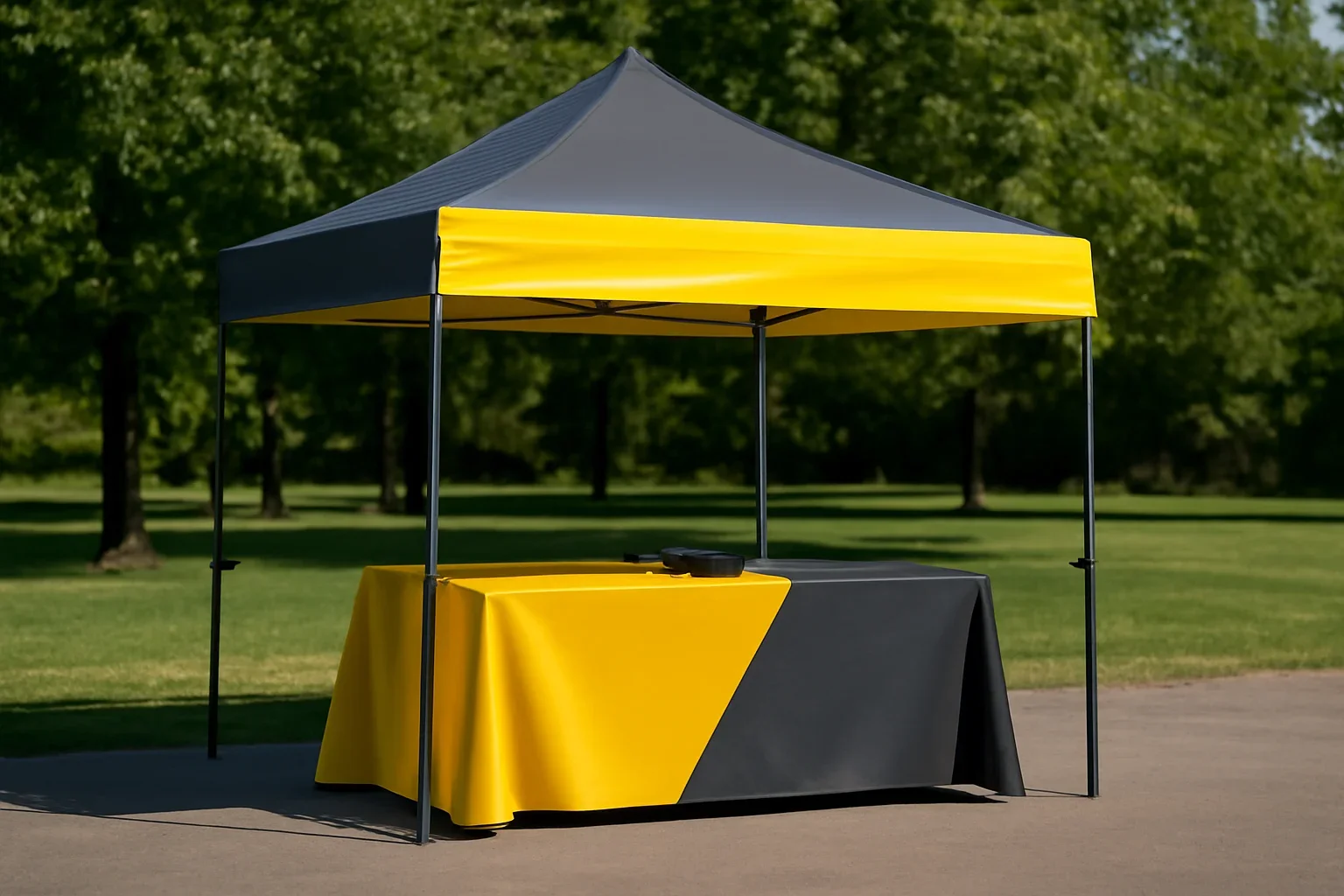
Artwork issues usually come from preventable problems such as missing files, low-resolution logos, unclear placement notes, or copy that tries to do too much. A cleaner template process keeps the order moving and protects the final look.
Use the cleanest files available for logos and other graphic elements. Crisp source files make placement decisions easier and reduce surprises during proof review.
If several people on the team are involved, choose one organized folder structure before sending anything over.
Templates are there to show where graphics can live cleanly on the canopy. They help you avoid crowding seams, cutting off important details, or placing text where it will be hard to read once the tent is assembled.
A proof should confirm the visual plan before production begins.
A canopy is not a brochure. Strong custom tents usually use concise messaging, high-contrast logos, and graphics that still read from a distance.
When everything is important, nothing stands out. Prioritize the elements people need to recognize first.
Check the artwork in the context of the whole order, including walls, banners, and any accessory graphics. That makes it easier to spot inconsistencies or missing elements before the final sign-off.
Once the proof is approved, changes may become harder to manage, so a careful final review is worth the time.
Whether the question is about setup, artwork, shipping, or ongoing care, clear project details make every answer more useful. The closer the support request is to the real situation, the faster the next step usually becomes.
You can also cross-check related topics in the FAQ, support center, or pages for weights, sidewalls, and pricing guidance.
These quick answers handle the questions that come up most often before a more specific project conversation starts.
Clean brand files and organized source assets are the best starting point because they make proofing and placement easier.
Templates show the usable print areas and help prevent layout problems that are easy to miss on a blank artboard.
Absolutely. Simple, readable branding often performs better than a crowded design.
Send the details you have and we will point you toward the right next step. Support works best when the question is connected to the real setup, not just the product name.