
The right canopy size depends on what needs to happen under the tent, not just how many feet the roof covers. Staffing, tables, products, equipment, queueing, and customer movement all affect the footprint that will actually feel usable on event day.
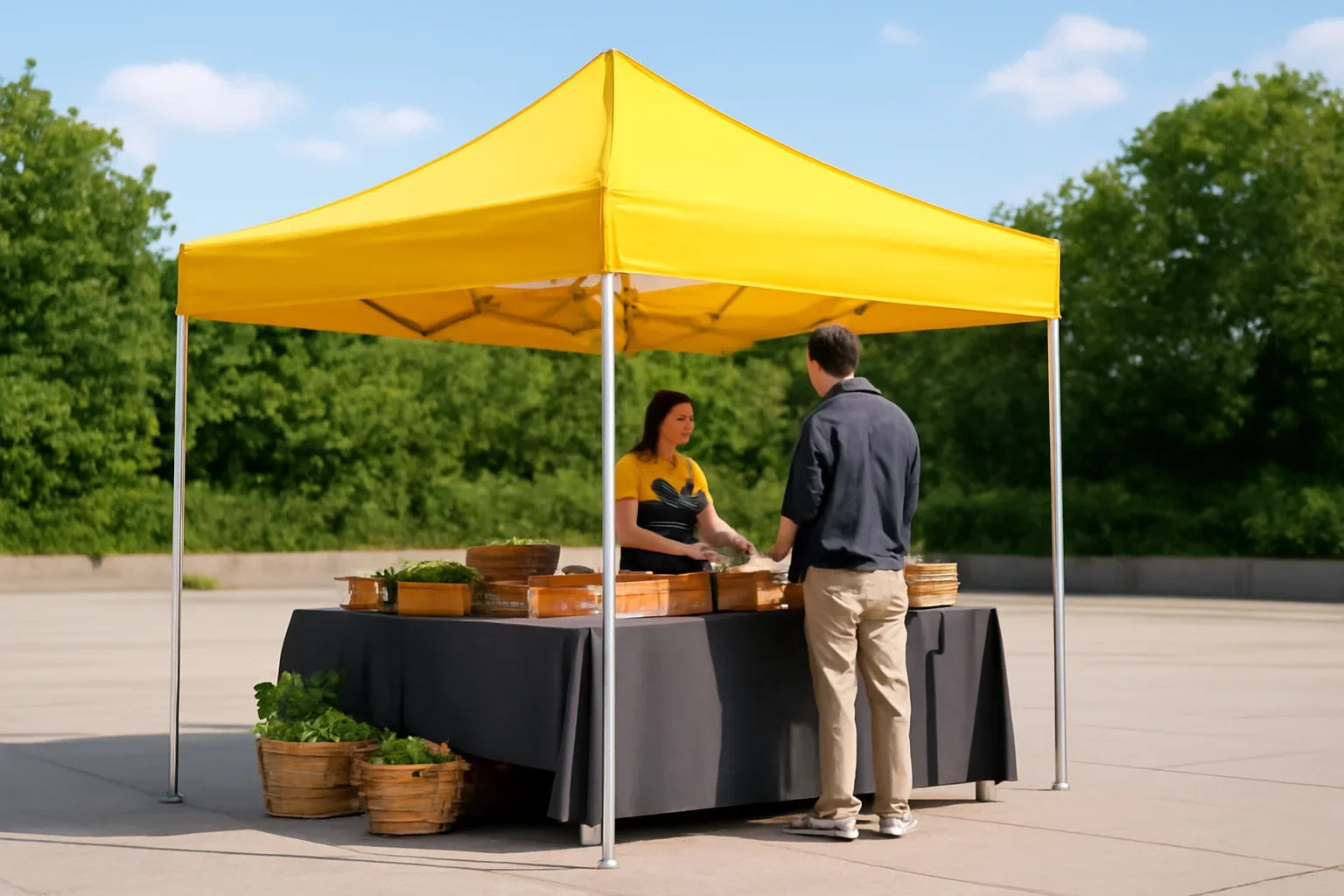
Size questions often sound simple until the real layout shows up. A tent that covers the basics on paper may still feel cramped once people, products, and accessories are all in place.
Think about the work the tent needs to support. A small registration table, a food service line, a product display, and a team bench area all need very different layouts even before accessories are added.
The best size choice usually appears once you define what people and equipment need to fit comfortably.
A 10x10 canopy tent is a popular starting point because it fits many standard booth and sideline needs. An expanded footprint often makes more sense when the setup includes extra staff, product displays, or longer service lines.
Smaller and larger sizes can work well too, but they should still be chosen around the real layout rather than guesswork.
The usable setup includes the area around the canopy, not only under it. You may need room for weights, open walls, customer queues, signage, or storage just outside the main footprint.
Venue rules and neighboring booths can also shape how comfortable the final setup feels.
Once the footprint is right, it becomes easier to choose the frame style, weights, walls, and graphics. Starting with the wrong size can make every later decision harder than it needs to be.
If branding is part of the project, the size also affects how much room you have for visible graphics and accessories.
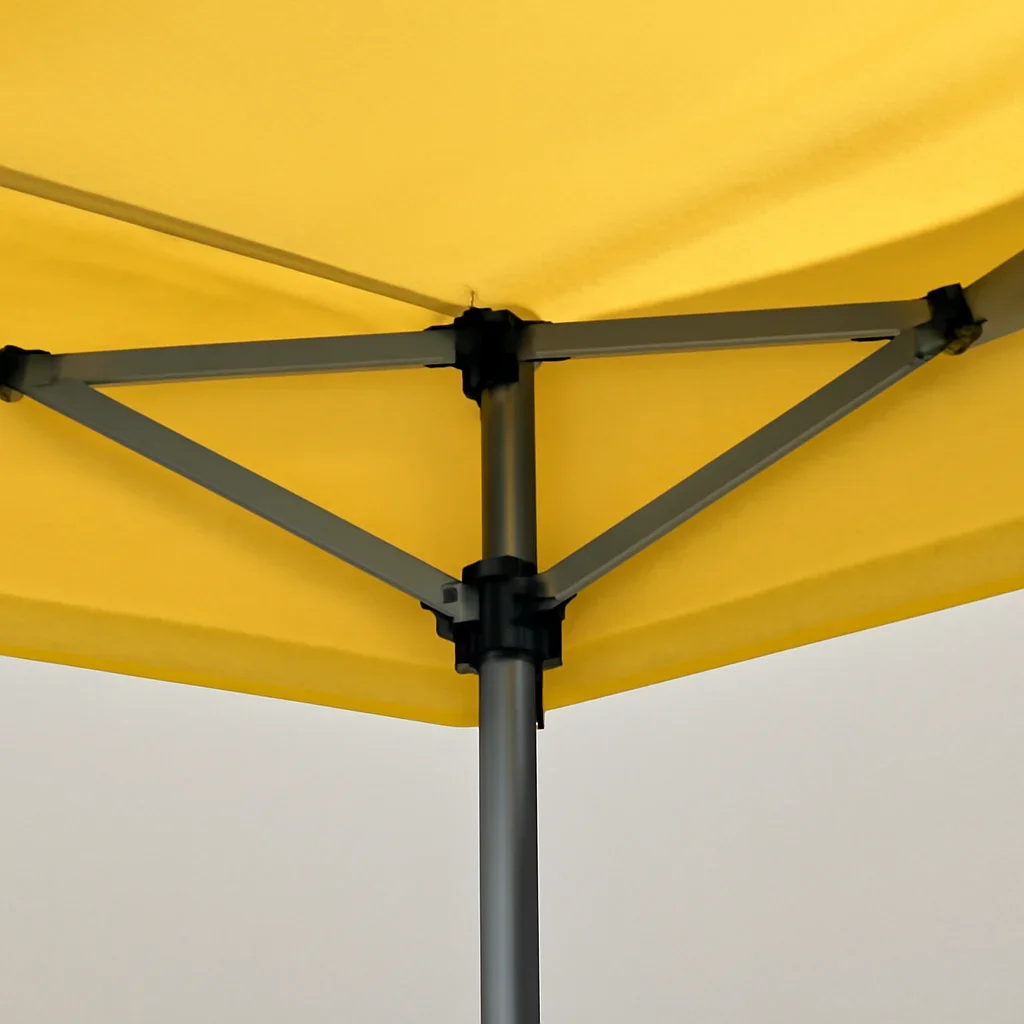
Whether the question is about setup, artwork, shipping, or ongoing care, clear project details make every answer more useful. The closer the support request is to the real situation, the faster the next step usually becomes.
You can also cross-check related topics in the FAQ, support center, or pages for weights, sidewalls, and pricing guidance.
These quick answers handle the questions that come up most often before a more specific project conversation starts.
A 10x10 is the size many buyers start with because it fits a wide range of standard uses, but it is not automatically right for every layout.
Move up when the setup needs more staff space, longer tables, wider service flow, or more visible branding room.
It is usually better to lock in the footprint first, then build the accessory package around it.
Send the details you have and we will point you toward the right next step. Support works best when the question is connected to the real setup, not just the product name.